Beyond the Rule of Thirds: 9 Photography Composition Techniques That Transform Your Photos
Nine practical composition techniques that go beyond the rule of thirds to instantly strengthen your photos, from leading lines to negative space.
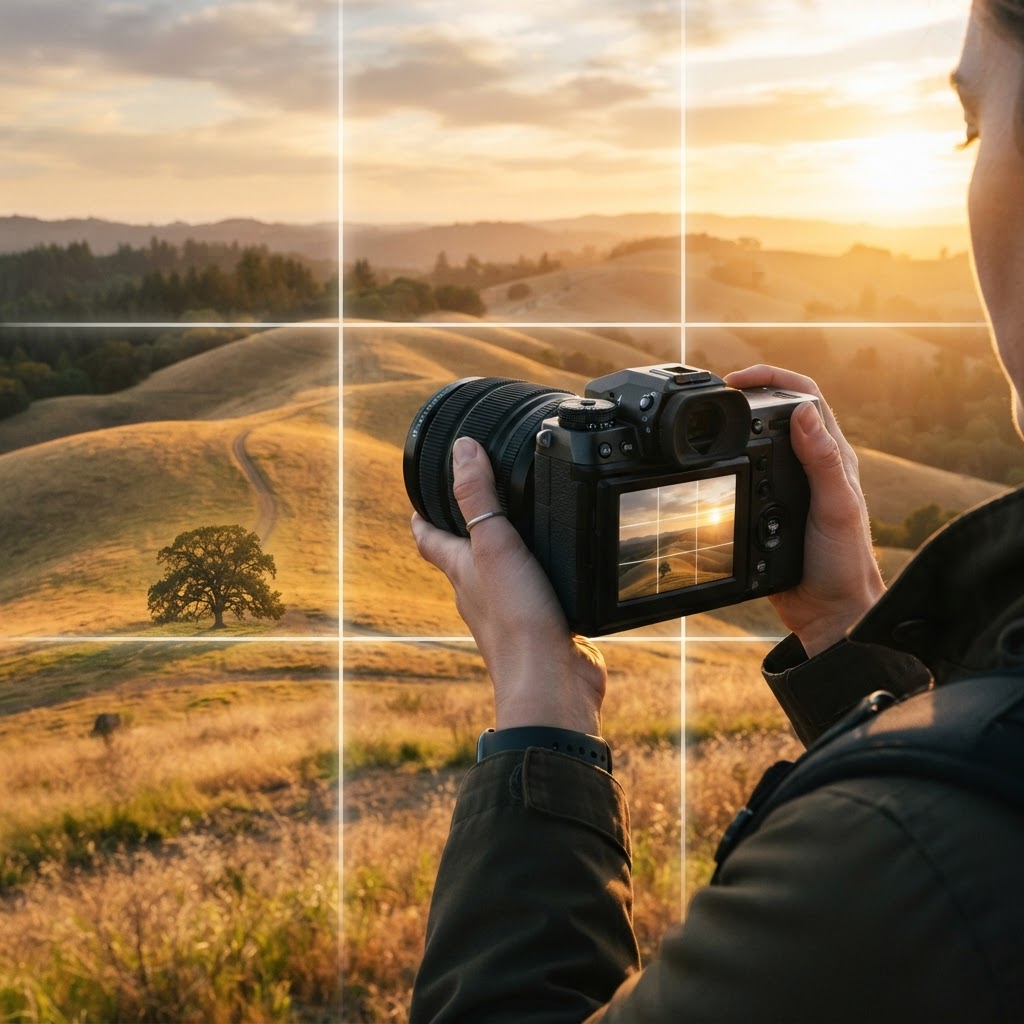
Why Photography Composition Techniques Beat Better Gear
The quickest way to improve your photos has nothing to do with your camera. It is how you arrange everything inside the frame. Strong photography composition techniques turn an ordinary scene into an image people stop scrolling to look at. A modest camera in the right hands beats an expensive one pointed at a messy frame every time.
Most of us learn the rule of thirds early, place our subject off-center, and then stop studying composition. That is like learning three chords and calling yourself a guitarist. Below are nine compositional tools you can start using on your very next shoot, drawn from techniques covered in depth by working photographers and educators.
1. Use Leading Lines to Pull the Eye In
Paths, fences, shorelines, and hallways all point somewhere. Put one of these lines in your frame and let it lead toward your subject. The viewer’s eye follows the line straight to what matters. A road that runs from the bottom corner to a person standing on the horizon creates instant depth and direction.
2. Frame Your Subject Inside the Frame
Look for natural frames: a doorway, an arch of branches, a window, even the space between two buildings. Placing your subject inside one of these adds a layer of depth and keeps attention locked where you want it. Frames also add context and story, telling the viewer something about the place.
3. Embrace Negative Space
Empty space is not wasted space. A small subject surrounded by sky, water, or a plain wall feels calm, isolated, or powerful. Negative space gives your subject room to breathe and makes the image feel intentional. This works beautifully in minimal portraits and moody landscapes.
4. Hunt for Symmetry and Patterns
People love patterns, and they love it even more when a pattern breaks. Find repeating shapes in architecture, tiles, or a row of trees, then break the repetition with one different element. A single red umbrella in a line of black ones is the shot. Symmetrical reflections in water or glass are another reliable winner.
5. Layer Foreground, Middle, and Background
Depth comes from layers. Put something interesting in the foreground, your subject in the middle, and context in the background. Flowers in front of a mountain range, or a rock ledge above a valley, pull the viewer into the scene instead of leaving them flat against it.
6. Use Color and Contrast as Compositional Tools
Color guides the eye as surely as any line does. A warm subject against a cool background pops. A single splash of saturated color in a muted scene becomes the focal point all by itself. Pay attention to complementary colors, like orange and blue, when you are scouting a location.
7. Get Low, Get High, Change the Angle
Eye level is the most common perspective, which makes it the most forgettable. Shoot from the ground looking up to make a subject tower. Shoot from above to turn a street into a graphic pattern. Even a small change in camera height completely rebuilds the geometry of a scene.
8. Fill the Frame
Move closer until your subject fills the viewfinder edge to edge. Distraction disappears, texture becomes the story, and the image gains impact. Filling the frame with a weathered face or a dew-covered leaf often says more than any wide shot could.
9. Then Break the Rules on Purpose
Every technique above is a starting point, not a law. Centered subjects can feel bold and formal. A tilted horizon can add energy. The difference between a mistake and a choice is intent. Study the guidelines until they are instinct, then break them deliberately when the scene calls for it. That is where your personal style starts to show.
Putting It All Into Practice
Do not try to use all nine photography composition techniques in one shot. Pick one per outing and hunt for it. Spend a morning looking only for leading lines. Give an afternoon to negative space. Targeted practice builds these skills far faster than shooting everything at once, and reviewing your best frames afterward cements what worked.
One honest critique session a week will do more for your growth than any new lens. Look at your favorites and ask which technique made them work. Patterns will emerge, and they become your signature strengths.
Further Reading & Resources
- Beyond the Rule of Thirds: 30 Creative Techniques for Composition – Format’s deep dive into advanced compositional tools.
- Composition in Photography: A Guide to Composing Better Photos – Photography Life’s comprehensive guide to composing with intent.
- 30+ Photography Composition Techniques You Should Know – Aftershoot’s practical roundup of techniques with visual examples.
Your Turn
Grab your camera this week and try two of these techniques. Then share your favorite result with me on social media or drop a comment below telling me which one clicked for you. If you want personalized feedback on your composition, book a session and we will build these skills together in the field.
More from the journal
Canon EOS R6 Mark II Review: Still Worth Buying in 2026?
A working photographer's Canon EOS R6 Mark II review: what still shines in 2026, where it lags the R6 Mark III and Nikon Z6III, and whether to buy…
Prime vs Zoom Lenses in 2026: Which One Actually Makes You Better?
Primes just swept the 2026 lens awards. An honest breakdown of prime vs zoom lenses, and which one deserves your money this year.

Photography Turns 200: Seven Moments That Still Shape Every Photo You Take
Photography turns 200 in 2026. Here are seven moments from the history of photography that still shape every photo you take today.