Photography Turns 200: Seven Moments That Still Shape Every Photo You Take
Photography turns 200 in 2026. Here are seven moments from the history of photography that still shape every photo you take today.
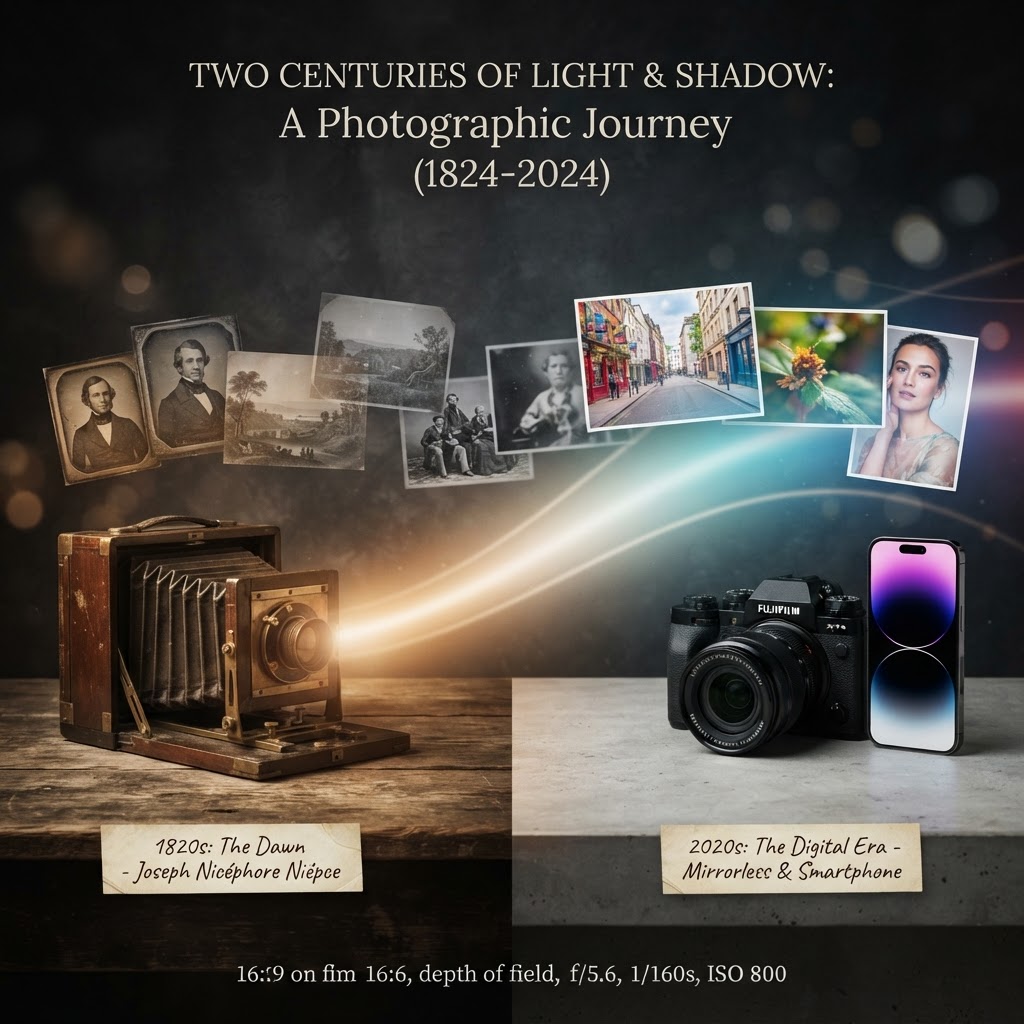
Sometime around 1826, a French inventor named Joseph Nicéphore Niépce pointed a camera out of an upstairs window at his estate in Burgundy. He removed the lens cap, waited hours, and captured the world’s first known photograph. It was a blurry view of rooftops, taken on a pewter plate coated in bitumen. Two hundred years later, museums across Europe are celebrating the bicentenary of that moment, and the history of photography is getting a fresh look. It deserves one. Every photo you take today rests on choices made in those two centuries.
Why the History of Photography Matters Right Now
2026 marks 200 years since Niépce’s window view. Institutions are taking the anniversary seriously. The MBAL museum in Le Locle, Switzerland, opened The First Photos. Until Proven Otherwise, an exhibition that studies the earliest photographs and what they reveal about us. London’s Photographers’ Gallery is revisiting untold stories from the medium’s past. The history of photography, curators argue, is not a settled timeline. It is a living record that keeps being rewritten as new “firsts” surface. For working photographers, that history is more than trivia. It explains why we shoot the way we do.
Seven Moments That Changed Photography Forever
1. The First Photograph (1826–27)
Niépce needed an exposure of eight hours or more to fix that rooftop image. It survives today at the University of Texas at Austin. The lesson still holds: patience can produce something no one else has made.
2. Photography Goes Public (1839)
Louis Daguerre unveiled the daguerreotype in Paris, and the world went wild. Suddenly a portrait did not require a painter. Studios spread across Europe and America within a few years.
3. You Press the Button, We Do the Rest (1888)
George Eastman’s Kodak camera put photography in ordinary hands. Roll film, one hundred shots, then mail the whole camera back to the factory. The amateur photographer was born, and the volume of pictures exploded.
4. The Camera Goes Pocket-Size (1925)
The Leica I fit 35mm film into a body you could carry anywhere. Photojournalism changed overnight. Photographers could chase moments instead of assembling a portable darkroom first.
5. The First Photo Sent From a Phone (1997)
In a California maternity ward, Philippe Kahn rigged his digital camera to his cell phone and shared his newborn daughter’s photo instantly. That jury-rigged prototype is the direct ancestor of the camera in your pocket. The MBAL exhibition spotlights this moment as one of photography’s great turning points.
6. Digital for Everyone (2000s)
Sensors replaced film, then phones replaced cameras for most people. The cost of a mistake dropped to zero. Shooting became endless, instant, and free.
7. The Fluid Era (Today)
We now take more pictures in a single day than the earliest photographers managed in a lifetime. The curators at MBAL call the medium’s history “fluid” because it keeps evolving, in technology and in social impact alike. The next chapter, from computational photography to AI tools, is being written now.
What Two Centuries Teach Every Photographer
Look at the pattern, and clear lessons emerge.
- Constraints sharpen creativity. Niépce had one plate and eight hours. Limitations forced intention. Try giving yourself one lens or one roll’s worth of frames on your next shoot.
- The gear debate is ancient. Painters scoffed at the daguerreotype. Film shooters scoffed at digital. Every generation worries the new tools will ruin the craft. They never do.
- Accessibility drives the art forward. The Kodak, the Leica, and the phone camera each handed photography to new voices. More cameras in more hands has always meant more remarkable images.
- Every “first” starts as an experiment. Kahn’s maternity-ward hack was duct-tape engineering. The tools you dismiss today may define tomorrow.
Two hundred years of the history of photography boil down to this: the technology always changes, and the eye behind it is what counts.
Further Reading & Resources
- MBAL: The First Photos. Until Proven Otherwise — the Swiss museum’s bicentenary exhibition on the earliest photographs.
- Britannica: History of Photography — a deep, reliable timeline of the medium from Niepce onward.
- The Photographers’ Gallery: 2026 Programme — bicentenary-year exhibitions revisiting overlooked chapters of photographic history.
Join the Bicentenary
The best way to honor 200 years of photography is to add your own frame to it. This week, try one shot made with a deliberate limitation: a single subject, a fixed lens, or no deletion allowed. Then tell me about it. Drop a comment below with the photo moment that first hooked you on this craft, and share this post with a photographer friend who loves the old stories as much as the new gear.
More from the journal
Canon EOS R6 Mark II Review: Still Worth Buying in 2026?
A working photographer's Canon EOS R6 Mark II review: what still shines in 2026, where it lags the R6 Mark III and Nikon Z6III, and whether to buy…
Prime vs Zoom Lenses in 2026: Which One Actually Makes You Better?
Primes just swept the 2026 lens awards. An honest breakdown of prime vs zoom lenses, and which one deserves your money this year.
Beyond the Rule of Thirds: 9 Photography Composition Techniques That Transform Your Photos
Nine practical composition techniques that go beyond the rule of thirds to instantly strengthen your photos, from leading lines to negative space.