Prime vs Zoom Lenses in 2026: Which One Actually Makes You Better?
Primes just swept the 2026 lens awards. An honest breakdown of prime vs zoom lenses, and which one deserves your money this year.
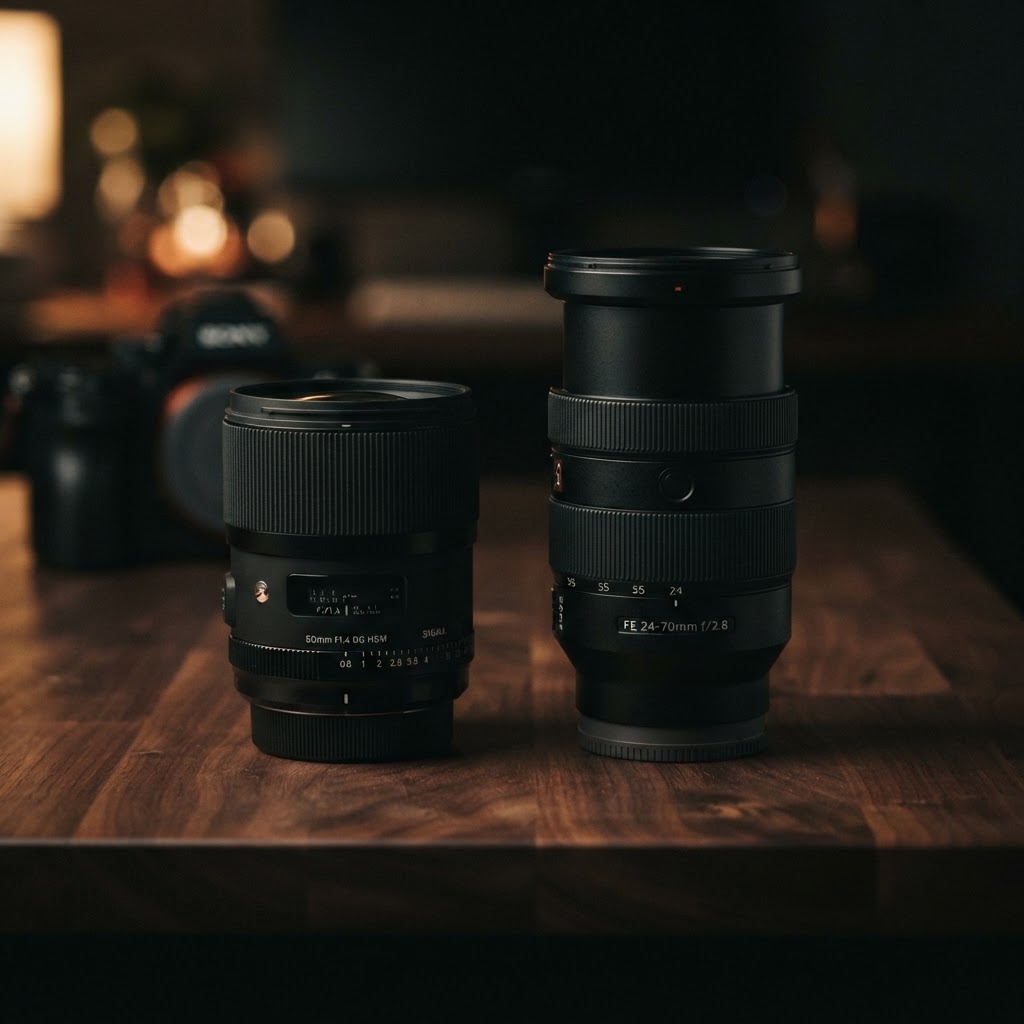
It is the oldest argument in photography. Walk into any camera club and you will hear it: prime vs zoom lenses, debated with the passion of a sports rivalry. In 2026, the debate got interesting again. Sigma’s 135mm f/1.4 just won Prime Lens of the Year at the Amateur Photographer Awards, and primes are back in the conversation in a big way. So which type of lens actually makes you a better photographer? The honest answer is more useful than the tribal one.
What Changed in 2026
For years, the default advice was simple. Buy a zoom, cover your bases, move on. That advice made sense when zooms were getting sharper every year and primes felt like a luxury. But 2026 told a different story. At this year’s Amateur Photographer Awards, the standout lens was not a zoom. It was the Sigma 135mm F1.4 DG DN Art, the first autofocus 135mm lens ever made with an f/1.4 aperture. The same lens took honors in the EISA 2026-2027 awards.
In other words, lens makers are pushing their most ambitious optical work into primes again. That shift matters for anyone deciding where their next lens budget should go.
Prime vs Zoom Lenses: The Case for Primes
Speed you can feel
A prime lens has one job, so it does that job exceptionally well. The best primes today open to f/1.4 or wider. That means three things in practice. You get more light, so you can shoot clean frames indoors without cranking your ISO. You get that buttery background separation everyone loves in portraits. And you get edge-to-edge sharpness that most zooms still cannot match at their longest settings.
The discipline effect
Here is the part nobody puts on a spec sheet. A fixed focal length forces decisions. You cannot stand still and twist a ring to reframe. You move, you crouch, you circle your subject. Photographers call it zooming with your feet, and it quietly builds composition instincts that a zoom lets you skip. Many working photographers credit their strongest images to the years they spent with a single 50mm.
The Case for Zooms
One lens, many situations
Zooms are not the lazy option. They are the practical one. A 24-70mm f/2.8 covers portrait, landscape, and event work in a single lens. For weddings, travel, and family sessions, swapping primes while the moment disappears is a real cost. When you are paying for a session, the zoom’s flexibility is not a compromise. It is the point.
Modern zooms closed the gap
Today’s premium zooms are genuinely excellent. Reviewers at DPReview consistently put current f/2.8 zoom kits at the heart of their recommended setups for 2026, and the image quality argument against zooms is much weaker than it was a decade ago. If sharpness were the only criterion, the gap now is small. The real differences are speed, weight, and price.
How to Choose Your Next Lens
A simple framework beats brand loyalty:
- Shoot people in controlled light? Get a fast prime. An 85mm or 135mm f/1.4 will transform your portraits.
- Shoot events, travel, or kids? Get a quality zoom. One 24-70mm or 70-200mm will earn its keep every week.
- Limited budget? Buy one affordable prime first. A nifty fifty teaches you more per dollar than anything else in photography.
- Already own a zoom? Your next purchase should be one prime that fills its weakness, usually a low-light lens for evening work.
The One Prime Worth Saving For
If you want a single recommendation from the 2026 crop, the Sigma 135mm F1.4 DG DN Art is the standout. Photographer Anabel DFlux tested it across portrait sessions for Sigma’s own blog and came away impressed by the sharpness, autofocus speed, and surprisingly light build for its class. It is an investment, no question. But it is the kind of lens that outlives two or three camera bodies.
The Bottom Line
Prime vs zoom lenses was never really a war. It is a question about how you like to work. Primes make you a more deliberate photographer and reward you with speed and sharpness. Zooms make you a more flexible one and let you stay in the moment. Most photographers end up needing both. Buy the one that fixes your biggest current frustration first, and ignore anyone who says the other choice is wrong.
Which side are you on? Tell me in the comments whether you shoot primes, zooms, or a mix of both, and what your next lens purchase is looking like. And if you are building a kit this year, browse the gear guides on the site or book a mentoring session and we will map out your setup together.
Further Reading & Resources
More from the journal
Canon EOS R6 Mark II Review: Still Worth Buying in 2026?
A working photographer's Canon EOS R6 Mark II review: what still shines in 2026, where it lags the R6 Mark III and Nikon Z6III, and whether to buy…
Photography Turns 200: Seven Moments That Still Shape Every Photo You Take
Photography turns 200 in 2026. Here are seven moments from the history of photography that still shape every photo you take today.
Beyond the Rule of Thirds: 9 Photography Composition Techniques That Transform Your Photos
Nine practical composition techniques that go beyond the rule of thirds to instantly strengthen your photos, from leading lines to negative space.