Snow Days Are for Keepers: Winter Photography Tips That Actually Work
Practical winter photography tips for nailing snow exposure, protecting your gear in the cold, and using short days to your advantage.
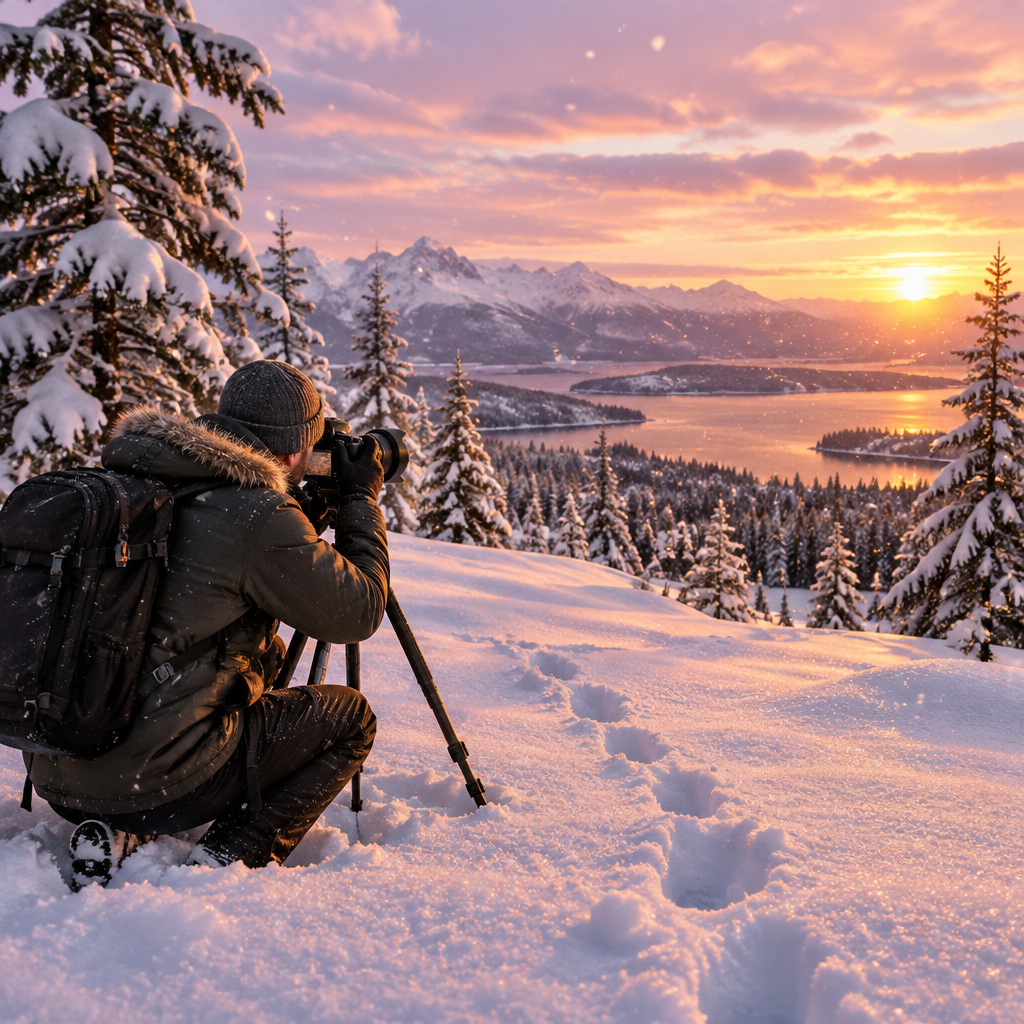
The first snow of the season is a gift for photographers. Fresh powder turns ordinary streets into clean white canvases. But cold weather also tricks your camera, drains your batteries, and punishes lazy technique. These winter photography tips will help you come home with keepers instead of gray blobs and dead batteries.
Get Snow Exposure Right
Your camera’s meter is built to average everything toward middle gray. Point it at a snow-covered scene and it panics. The result? Snow that looks dull, gray, and underexposed. Fix this by adding positive exposure compensation of +1 to +2 EV. In manual mode, just overexpose from what the meter tells you.
When in doubt, meter off something neutral instead. A gray jacket, dark tree bark, or the palm of your glove works well.
Trust Your Histogram, Not the Screen
Winter light is bright, and your LCD makes everything look better than it is. Check the histogram instead. Push the graph toward the right side until it almost touches the edge, then stop. Snow should sit high and bright without clipping off the right side.
Shoot RAW. White snow gives you maximum editing headroom, and winter white balance can shift fast between shade and sun.
Protect Your Gear From the Cold
Cold weather is rough on equipment, but a few habits keep everything safe.
- Keep spare batteries warm. Batteries can lose half their power in freezing temps. Carry spares in an inside pocket, close to your body, and swap them as needed.
- Watch for condensation. Moving a cold camera into a warm house creates fog, inside and out. Seal the camera in a plastic bag or its case, and let it warm up slowly before opening it.
- Wear touchscreen gloves. Fingers get clumsy when freezing. Thin liner gloves or photography gloves with fold-back fingertips keep you shooting.
- Skip the hand warmers on the lens. Keep them for your pockets and batteries. Sudden temperature swings can fog optics.
Use the Low Winter Sun
Here’s the beautiful irony of winter: the season with the least daylight offers some of the best light. The sun stays low all day, which means long, soft shadows and extended golden hours. What you’d normally get for 30 minutes after sunrise, winter gives you for hours.
Use that low angle for:
- Warm rim light on portraits
- Long shadows that add depth to snowscapes
- Silhouettes against a bright sky
- Sparkle on snow when the sun is behind you at a low angle
Compose for Simplicity
Snow simplifies the world for you. It hides clutter, mutes colors, and turns messy scenes into minimal ones. Lean into it. Find one strong subject, like a lone tree, a red barn, or a single set of footprints, and give it room to breathe against the white.
Watch for leading lines too. Fence lines, sled tracks, and frozen streams cut clean paths through the frame.
Settings for Falling Snow
Falling snow is where winter photography gets fun, and your shutter speed is the creative dial.
- Freeze the flakes: use 1/500s or faster to catch crisp, individual snowflakes mid-air.
- Soften the mood: drop to 1/60s or slower for a dreamy, streaking snowfall effect.
- Backlight the snow: position the sun (or a streetlight) behind the falling flakes so they glow and sparkle.
- Never use flash. It lights up nearby flakes as giant white blobs, ruining the shot.
Essential Winter Photography Tips Checklist
- Overexpose +1 to +2 EV so snow stays white
- Verify brightness on the histogram, not the LCD
- Keep spare batteries in a warm pocket
- Bag your camera before coming indoors
- Shoot RAW for winter white balance control
- Use the low sun for long soft shadows and silhouettes
- Choose a fast shutter to freeze snow, slow to streak it
Get Out There Before It Melts
Fresh snow is a limited-time offer. It hides distractions, softens light, and gives your photos a clean look no other season can match. Charge your batteries, stuff your pockets with spares, and go make something beautiful before the next thaw.
Already have a favorite winter shot? Tag LowKei Photography or drop it in the comments, I’d love to see how you use these winter photography tips in the field. And if you’re planning a winter session, let’s talk. The cold months make for some of the most memorable portraits of the year.
Further Reading & Resources
More from the journal
Canon EOS R6 Mark II Review: Still Worth Buying in 2026?
A working photographer's Canon EOS R6 Mark II review: what still shines in 2026, where it lags the R6 Mark III and Nikon Z6III, and whether to buy…
Prime vs Zoom Lenses in 2026: Which One Actually Makes You Better?
Primes just swept the 2026 lens awards. An honest breakdown of prime vs zoom lenses, and which one deserves your money this year.

Photography Turns 200: Seven Moments That Still Shape Every Photo You Take
Photography turns 200 in 2026. Here are seven moments from the history of photography that still shape every photo you take today.