Chasing the Colors: 10 Autumn Photography Tips That’ll Transform Your Fall Shots
A practical guide to autumn photography: timing, polarizing filters, backlighting, white balance, bracketing, and more — how to shoot fall color that actually looks the way it felt.
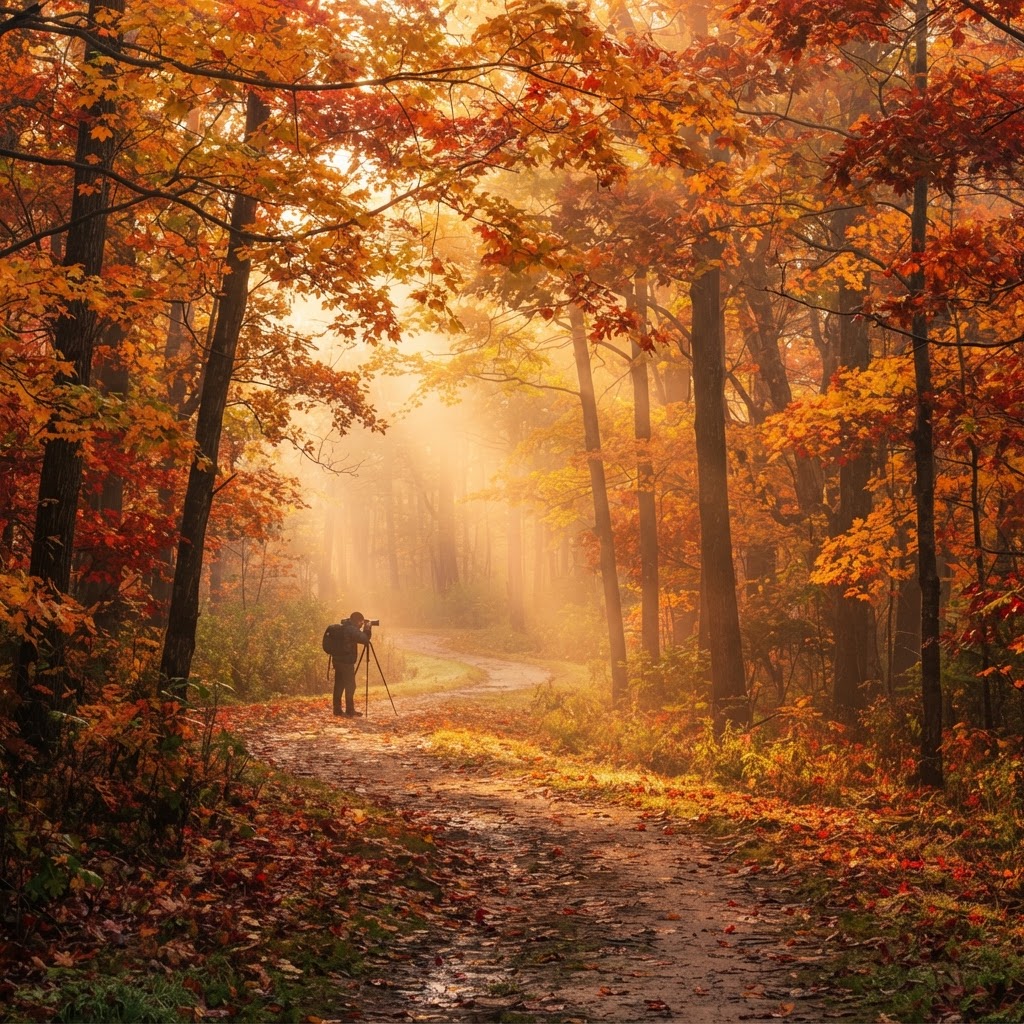
Why Autumn Is the Photographer’s Season
There’s a two-week window every year when the world turns into a goldmine for photographers. The light gets lower and softer, the colors do half your creative work for you, and every park, backroad, and hillside becomes a potential portfolio shot. But here’s the thing most photographers get wrong: they show up at noon on the first pretty Saturday of October, shoot a few wide shots of trees, and wonder why their images look like everyone else’s phone pictures.
Autumn rewards the deliberate shooter. These ten tips will help you make the most of the season — whether you’re chasing peak color in the mountains or finding fall magic in your own neighborhood.
10 Autumn Photography Tips That Will Transform Your Fall Shots
1. Time It Right — and Then Show Up Early
Peak color is a moving target. It shifts with elevation, latitude, and that year’s weather, so track local foliage reports rather than relying on last year’s calendar. And when you do go, get there for sunrise or the first hour after. Low-angle morning light makes colors glow, mist rises off rivers and lakes, and you’ll beat the crowds that flood popular spots by mid-morning.
2. Put a Polarizing Filter On — Yes, Really
If you buy one piece of glass for autumn, make it a circular polarizer. It cuts the glare off leaves and wet surfaces, saturating reds and golds in a way no editing preset can honestly replicate. It also deepens blue skies when you’re shooting wider scenes. Rotate the filter until the colors pop, and watch your shutter speed — you’ll lose one to two stops of light.
3. Bring the Tripod You’ve Been Avoiding
With less daylight and a polarizer eating light, you’ll often be shooting at slower shutter speeds than you think. A tripod lets you drop your ISO to 100, stop down for edge-to-edge sharpness, and take the time to actually compose instead of machine-gunning handheld. Fall is a slow-photography season. Embrace it.
4. Go Long: Isolate Color with a Telephoto
The biggest mistake in fall photography is shooting everything wide. A telephoto lens lets you compress distant hillsides into layered waves of color, pick out one flaming maple against a dark evergreen background, and build graphic, gallery-worthy frames from chaos. Some of the strongest autumn images I’ve ever made had no horizon line at all.
5. Backlight the Leaves
Leaves are translucent, and that’s their superpower. When the sun is behind them, maples and aspens literally glow like stained glass. Position yourself so the light comes through the canopy toward your lens, use a branch or your hand to shade the front element from flare, and meter for the brightest leaves so you don’t blow them out.
6. Take Control of Your White Balance
Auto white balance will fight you all season — it sees all that amber and tries to “correct” it, draining the warmth you showed up for. Set your white balance to Daylight or Cloudy, or shoot RAW and commit to warming the scene in post. A slight amber bias is the emotional signature of autumn. Don’t let your camera’s automation sand it off.
7. Bracket Your Exposures
Fall scenes are full of contrast: bright foliage, dark trunks, reflective water. One frame often can’t hold it all. Bracket your exposures (or use your camera’s HDR mode for a starting point), and when the light is dramatic, merge or blend later for a single image with detail from the highlights through the shadows. Insurance costs you nothing but card space.
8. Simplify, Simplify, Simplify
Color overload is real. When everything is beautiful, the strongest images come from ruthlessly deciding what doesn’t belong in the frame. Compose your shot, then ask what you can remove — get closer, change your angle, wait for a distracting element to move. One clean subject with strong color beats a cluttered hillside every single time.
9. Shoot the Whole Season, Not Just Peak Week
Early fall brings single red maples in still-green forests; late fall gives you bare branches, frozen leaves, and frost. Some of the moodiest, most original fall images happen well before or after “peak.” The photographers with the deepest autumn portfolios are the ones who went out four times, not once.
10. Get Close and Notice the Details
One leaf, backlit on dark water. A spider web strung with dew between changing branches. Steam rising off a creek at dawn. Don’t forget the intimate stuff — a short macro lens or even your longest lens at close focus turns small moments into striking images. Grand vistas get the likes; details get the prints.
Getting the Shot Is Only Half the Season
Autumn moves fast. The same hillside that glowed gold last Sunday can be bare by the next. Grab your tripod, check a foliage map, and get out there while the getting’s good — and if you’d rather have someone else chase the light while you just enjoy the moment with your people, that’s literally what I do.
Ready to capture your family or your ride against this year’s fall colors? Book a session — golden hour is booking up fast this time of year.
Further Reading & Resources
- How to Photograph Beautiful Autumn Landscapes — Picfair Focus
- Landscape Photographer Shares Key Tips from His Progression — PictureCorrect
- Landscape Photography Guide: 1-Page Field Checklist — Alan Ranger
More from the journal

Long Exposure Photography: Turning Time Into Art (and Having a Blast Doing It)
Long exposure photography lets time paint the picture — silky waterfalls, glowing light trails, and star trails over the Tennessee Valley. Here's how to shoot it, from a…