The 2026 Mirrorless Camera Guide: What to Buy and Why
A practical mirrorless camera guide for 2026 — top picks from Canon, Nikon, and Fujifilm for every budget, from entry-level to pro.
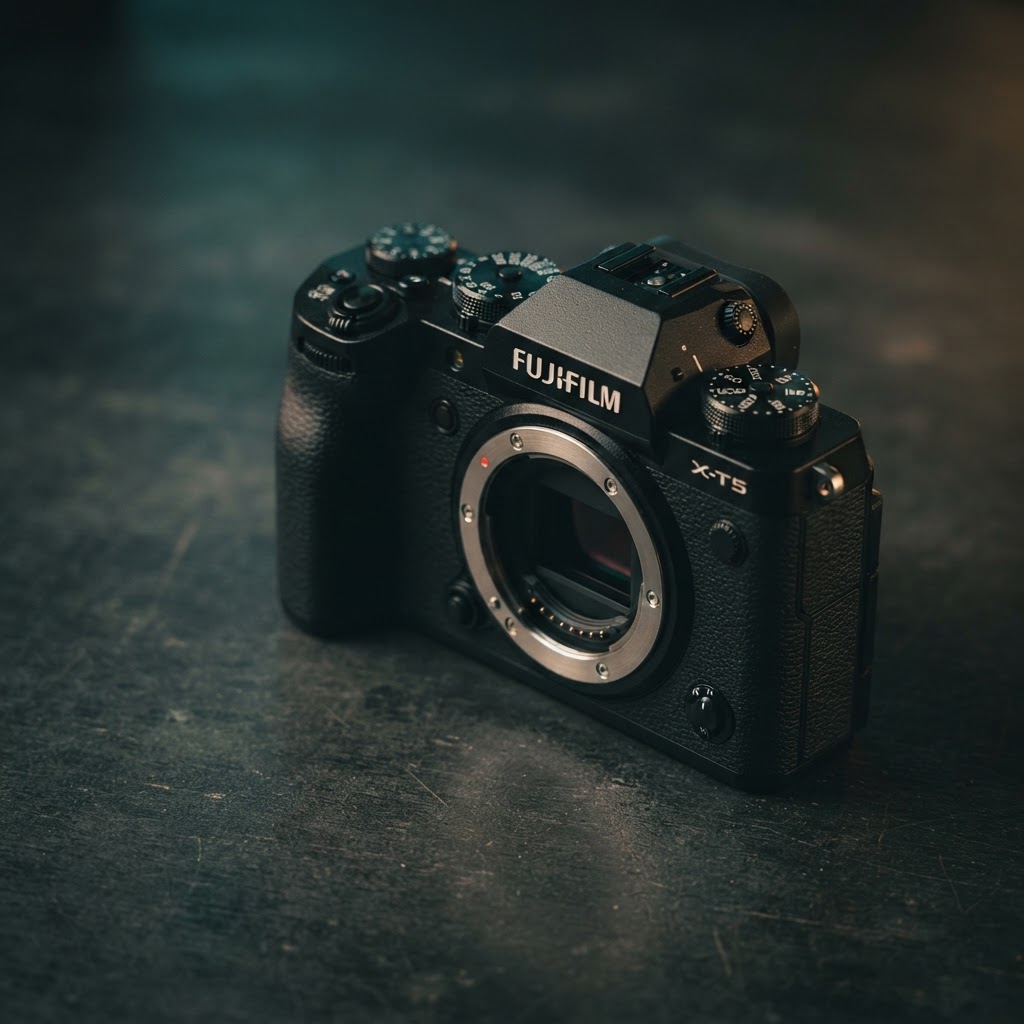
Why a Mirrorless Camera Is Worth It in 2026
If you’ve been shooting with your phone or an aging DSLR, this is the year to make the jump. The mirrorless camera market has matured fast, and today’s models pack features that would have cost triple a few years ago — blistering autofocus, in-body stabilization, pro-grade video, and electronic viewfinders that show you exactly what you’re getting before you press the shutter. This mirrorless camera guide breaks down what matters, what to skip, and which models rise to the top for every budget.
What Makes a Mirrorless Camera Different?
SLR cameras use a physical mirror to bounce light from the lens into an optical viewfinder. Mirrorless cameras ditch that mirror entirely. Instead, the sensor feeds a live preview to an electronic viewfinder (EVF) or the rear screen. That sounds like a small change, but it reshapes the whole shooting experience.
Without a mirror box, the camera body can be smaller and lighter. The EVF shows your exposure, white balance, and depth of field in real time — what you see is what you get. And because there’s no mechanical mirror swinging, burst shooting speeds have skyrocketed. Some current models rattle off 40 frames per second with full autofocus tracking between shots.
The Five Things That Actually Matter
1. Sensor Size and Resolution
Full-frame sensors (about 36 × 24mm) give you the best low-light performance, the shallowest depth of field, and the widest dynamic range. APS-C sensors are smaller and more affordable, but still excellent for most photography. Micro Four Thirds is the most compact option, trading some image quality for smaller lenses and lighter kits. For most enthusiasts, full-frame or APS-C hits the sweet spot.
2. Autofocus That Actually Tracks
Five years ago, autofocus was the weak link in mirrorless cameras. Not anymore. Today’s best models use AI-driven subject recognition to lock onto eyes, faces, animals, and vehicles with eerie precision. Canon’s EOS R6 Mark II and Nikon’s Z6III both deliver class-leading tracking that keeps fast-moving subjects sharp across long bursts. If you shoot sports, wildlife, or active kids, this is the feature to prioritize.
3. In-Body Image Stabilization (IBIS)
IBIS moves the sensor to counteract your hand shake, letting you shoot at shutter speeds two to seven stops slower than you normally could handheld. That means sharper photos in dim light without cranking your ISO. Nikon’s Z5II and Z6III offer up to 8 stops of correction. Fujifilm’s X-S20 manages about 7. If you shoot interiors, events, or anything without a tripod, IBIS is a game-changer.
4. Video That Doesn’t Feel Like an Afterthought
Every camera on this list shoots 4K, but the details vary. The Nikon Z6III records 6K60 Raw video. The Panasonic Lumix DC-G9 II handles 10-bit 4K with excellent stabilization. The Canon EOS R6 Mark II offers full-width 4K60 with 10-bit color. If video is part of your workflow — even occasionally — check whether the camera overheats during long takes and whether it supports 10-bit output for better color grading.
5. Lens Ecosystem
A camera is only as good as the lenses you can mount on it. Sony’s E-mount has the deepest third-party lens catalog. Canon’s RF mount is growing but still limits third-party options. Nikon’s Z mount is expanding quickly with both first-party and Sigma lenses. Fujifilm’s X mount has a rich selection of primes and zooms from Fujifilm and third parties. Before you commit to a body, check whether the lenses you’d want exist — and what they cost.
Mirrorless Camera Guide: Top Picks for Every Budget
Best Entry-Level Full-Frame: Nikon Z5II (around $1,697)
If you’re stepping up from a phone or APS-C body, the Z5II is the smartest value in full-frame today. You get a stabilized sensor, fast autofocus with 3D tracking at 14fps, dual card slots for redundant recording, and a weather-sealed magnesium body. PCMag calls it “the best value among the current slate of full-frame cameras,” and after testing one, I agree. It’s the camera I’d hand a friend who’s ready to get serious.
Best All-Arounder: Nikon Z6III (around $1,997)
The Z6III is the Goldilocks camera. Stabilized full-frame sensor, 20fps Raw bursts, a stunningly bright EVF, and Raw video up to 6K60. It’s not cheap, but it’s one body that handles everything — portraits, events, landscapes, video — without apology. If you only buy one camera for the next five years, this is a safe bet.
Best APS-C Value: Fujifilm X-S20 (around $1,399)
The X-S20 punches above its price. It has a magnesium body, a swing-out LCD, 7-stop stabilization, built-in flash, and Fujifilm’s beloved film simulations. It shoots 10-bit 4K60 and 6K30 video. The trade-offs: no weather sealing, a smaller EVF, and some overheating risk on long video takes. For stills-focused photographers who want gorgeous color straight out of camera, it’s hard to beat.
Best for Hybrid Creators: Canon EOS R6 Mark II (around $1,999)
The R6 Mark II pairs a stabilized full-frame sensor with Canon’s industry-leading subject recognition autofocus. It fires at 40fps with the electronic shutter and records full-width 4K60 in 10-bit. The main drawback is limited third-party lens support — you’re mostly buying Canon’s own RF lenses. But if autofocus reliability is your top priority, nothing in this price range tracks better.
Best Compact Option: Canon EOS R50 V (around $569)
Not everyone needs full-frame. The R50 V is a crop-sensor mirrorless that records crisp 4K30, includes dual mounting points for both widescreen and vertical video, and works with Canon’s RF lenses. At under $600, it’s the lightest, cheapest way into a real interchangeable-lens system. It’s not weather-sealed and the sensor isn’t stabilized, but for casual shooters and content creators, it’s a fantastic entry point.
Should You Upgrade from a DSLR?
If your DSLR still works and you’re happy with the results, there’s no urgent reason to switch. But the gap is real. Mirrorless cameras focus faster in low light, show you your exposure in real time, shoot bursts two to four times faster, and offer video features that no DSLR can match. If you’ve been on the fence, the current generation — especially the Z5II and Z6III — is where the value finally outweighs the cost of switching.
Don’t Forget the Glass
A great body with a mediocre lens produces mediocre photos. Budget for at least one quality lens alongside your camera. A fast prime — something in the 35mm or 50mm f/1.8 range — costs a few hundred dollars and will outresolve most zooms. Start there, add a versatile zoom later, and build your kit around what you actually shoot.
The Bottom Line
The mirrorless market in 2026 is the best it’s ever been for photographers. Whether you’re spending $569 on an R50 V or $3,400 on a Nikon Z 8, you’re getting more capability per dollar than any generation before. Pick the body that fits your budget and lens system, invest in one good lens, and go make pictures you’re proud of.
Need professional photos without the gear homework? Book a session — I bring the cameras, you bring yourself.
Further Reading & Resources
- The Best DSLR and Mirrorless Cameras for 2026 — PCMag’s hands-on, lab-tested buying guide
- Best Mirrorless Camera 2026: 7 Expert-Tested Picks & Reviews — Outdoor Tech Lab
- The 6 Best Mirrorless Cameras For Travel of 2026 — RTINGS.com
More from the journal

Chasing the Colors: 10 Autumn Photography Tips That’ll Transform Your Fall Shots
A practical guide to autumn photography: timing, polarizing filters, backlighting, white balance, bracketing, and more — how to shoot fall color that actually looks the way it felt.

Long Exposure Photography: Turning Time Into Art (and Having a Blast Doing It)
Long exposure photography lets time paint the picture — silky waterfalls, glowing light trails, and star trails over the Tennessee Valley. Here's how to shoot it, from a…